Not all bladder stones have to come out through surgery, but many of them do, and which path your pet takes depends on the type of mineral involved and whether urine can still pass. Struvite stones, which in dogs almost always develop alongside a urinary tract infection and in cats usually form without one, can sometimes be dissolved over several weeks with a prescription diet, paired with antibiotics when bacteria are driving them. Calcium oxalate stones are a different story, because they will not dissolve no matter what your pet eats. Obstruction is what changes the timeline, since a stone lodged in the urethra stops urine from leaving at all, and that turns an uncomfortable problem into a dangerous one within hours.
Peak Pet Urgent Care in Reno is open seven days a week for problems that should not wait until Monday, and straining in the litter box or the yard is high on that list. We have digital X-ray and ultrasound on site to find the stones, and when they need to come out, we perform surgery to remove them from the bladder right here, with a copy of the record going to your family veterinarian so the prevention plan carries on after the visit. If your pet is straining and nothing at all is coming out, that is an emergency, so head straight to the nearest 24-hour hospital, day or night. If your pet is still passing urine but going more often than usual, or you are seeing blood, check in online and come see us.
Bladder Stones: Diet, Surgery, and Timing
- Struvite stones can sometimes dissolve on a prescription diet over several weeks; calcium oxalate stones have to be removed.
- A pet who strains over and over and produces nothing may be blocked, which is an emergency for a 24-hour hospital.
- Imaging and a urinalysis together tell us how many stones there are, where they sit, and which mineral we're likely dealing with.
- Once the stones are gone, food, water intake, and scheduled rechecks keep new ones from forming.
Which Urinary Signs Mean You Should Come In Today?
Repeated trips to the box or the yard with only a few drops each time, pink or cloudy urine, licking at the back end, and accidents from a reliably housetrained pet all point toward an irritated bladder. Any of those deserve a same-day look. Straining with nothing coming out is an emergency.
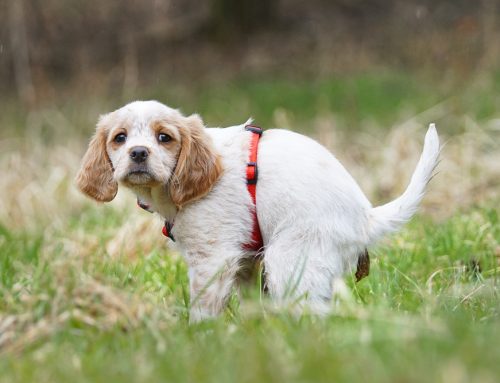
Cats tend to be quieter about it. A cat who starts using the tub, the sink, or the rug right next to the box isn't being spiteful; that's a message about pain. Dogs are usually more obvious, with a squat that goes on too long and ends in a dribble.
| What you notice | What it can mean | How fast to move |
| Many trips, small amounts each time | Bladder irritation from stones, crystals, or infection | Same day |
| Pink, red, or cloudy urine | Bleeding from an inflamed bladder lining | Same day |
| Straining with nothing produced, crying, pacing | Possible urethral obstruction | Emergency, now |
| Accidents from a housetrained pet | Urgency and loss of bladder control | Same day |
| Extra licking at the genital area | Lower urinary tract discomfort | Within a day |
| Off food, vomiting, hiding | A blockage or a stone that's been there a while | Emergency if paired with straining |
Signs that come and go can fool a household into waiting, and the quiet stretches don't mean the problem resolved.
A few instincts to resist while you wait. Don't press on a belly that might be blocked; a full bladder can rupture. Don't share your own painkillers either, because ibuprofen, naproxen, and acetaminophen poison a pet's kidneys and, in cats, their red blood cells. Cranberry supplements and drugstore remedies can wait until we know what we're treating.
Why Can't Bladder Stones Wait Until Monday?
Stones hurt and keep the bladder inflamed, but the reason we don't schedule them out for later is because of where one can end up. A stone that slips into the urethra turns a nagging problem into a crisis within hours, and urinary obstruction hits small male dogs and male cats hardest because their urethras taper to a pinpoint.
Most of what we find in dogs and cats sits in the bladder itself, squarely among the problems that are urgent but not life-threatening. They’re urgent because without treatment, they can become life-threatening when they move and cause a blockage. If nothing at all is coming out, don't wait for us to open; seek emergency care right away.
What Happens if My Pet is Blocked?
A pet who can't pass urine needs a urinary catheter that goes up the urethra, and flushing pushes the lodged stone back into the bladder to let urine flow again. Fluids and bloodwork follow, because potassium and kidney values need correcting before anything else happens, and that takes hours of close watching. When urine can't leave, pressure backs up toward the kidneys and waste products climb in the bloodstream. Potassium rises with them, and too much of it slows the heart to dangerous levels. Pets who need continuous overnight monitoring belong at a 24-hour hospital, and we coordinate that transfer.
What Are Bladder Stones Made Of?
Bladder stones, or uroliths, run from coarse sand up to marble size, and every bladder contraction grinds them against the lining. Struvite and calcium oxalate make up most of them; urate, cystine, and silica turn up less often.
They start as crystals. When urine stays concentrated or its pH drifts, dissolved minerals fall out of solution and build in layers. One pet may carry a single large stone, another a dozen pebbles, and the count matters as much as the size when we're choosing a plan.
What Causes Bladder Stones in Dogs and Cats?
Infection, food, breed, body weight, and hormone disease each nudge urine chemistry in the wrong direction, and most pets who build stones have more than one factor working on them.
- Infection: Urinary tract infections are one of the most common starting points. Certain bacteria split urea, the urine turns alkaline, and struvite crystals form. In dogs, struvite and a bladder infection nearly always travel as a pair.
- Food and water: Diets heavy in stone-building minerals hand the urine more raw material, and dry-only feeding keeps urine concentrated. Cats, descended from desert hunters, are famously reluctant drinkers.
- Species and breed: Miniature Schnauzers, Bichon Frises, Shih Tzus, Lhasa Apsos, and Yorkshire Terriers top the canine lists, while Dalmatians and Bulldogs lean toward urate. Feline struvite usually forms with no infection at all, one reason urinary trouble in cats follows a different script than it does in dogs.
- Hormones and blood sugar: Diabetes spills sugar into the urine, feeding bacteria and making the infections that seed struvite stones far more likely. Cushing's disease and high blood calcium push the oxalate side.
- Extra weight: Obesity turns up far more often in dogs with bladder stones than in lean dogs, and heavier pets tend to drink less, move less, and hold urine longer between trips outside.
- Urine pH: Struvite forms in alkaline urine and calcium oxalate in acidic urine, and a plan that discourages one can quietly encourage the other. Guessing at the mineral is how pets end up on the wrong diet.
Infection is the slower danger. A struvite stone hides bacteria where antibiotics can't reach them, and the infection comes back a few weeks after each course looking identical. That loop runs until the stone is out, and the constant irritation thickens the bladder wall along the way.
How Do We Find Out Which Kind of Stone Your Pet Has?
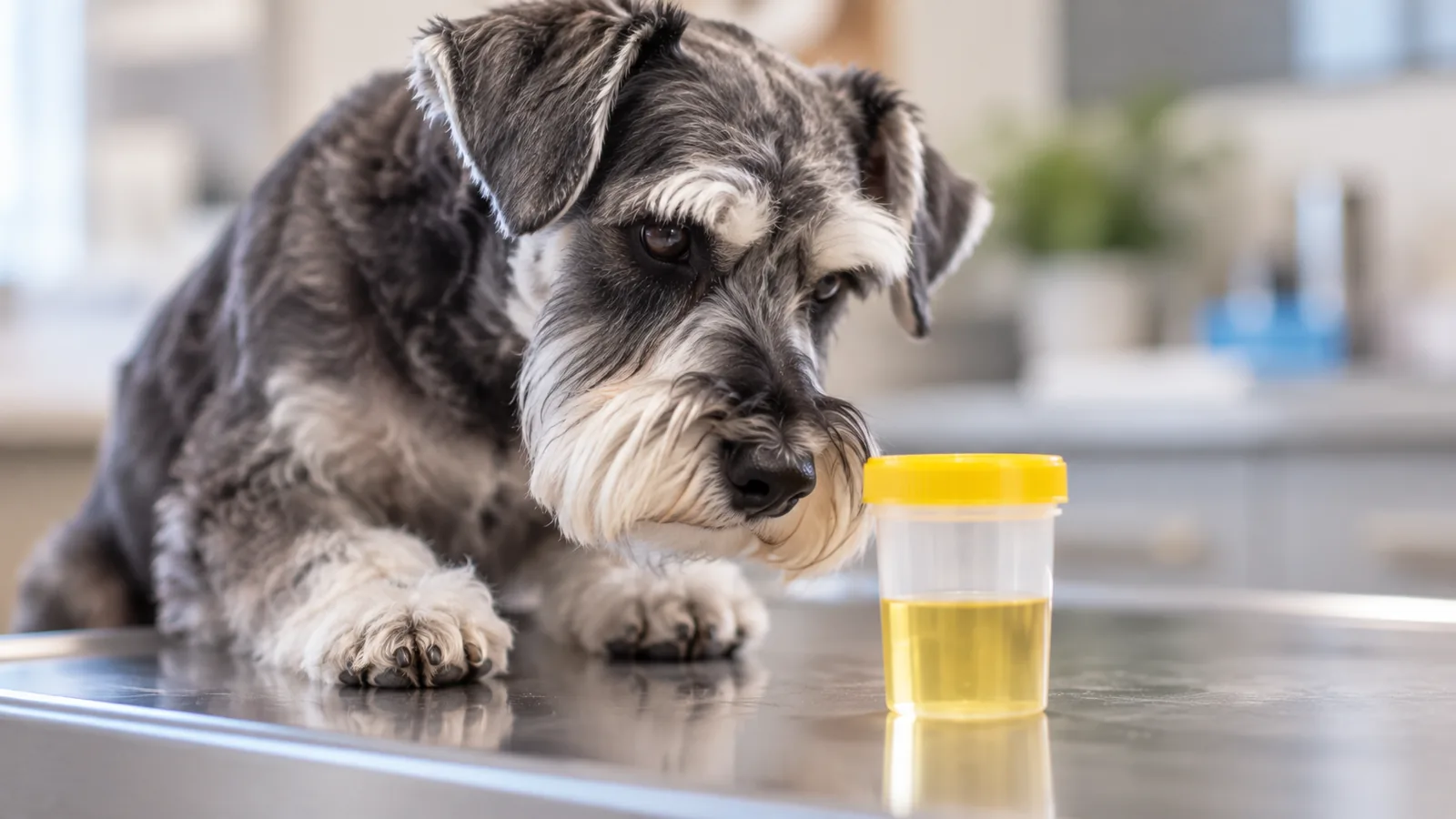
Locating stones takes imaging, and naming the mineral takes chemistry. A urinalysis reads pH, crystals, blood, and evidence of bacteria. Radiographs and ultrasound count the stones and pin down where they sit. A urine culture says whether an organism is driving the whole process.
Walk-in visits start with triage, and the sickest pets move to the front. We'll take the history from you: when this started, what you're seeing in the box or on the grass, and whether it's happened before.
Our in-house lab runs the urinalysis here rather than sending it out, and the two imaging views cover each other's blind spots. Struvite and calcium oxalate are dense enough to appear on a radiograph, while urate and cystine often aren't. Ultrasound catches what film misses and shows bladder wall thickening besides. CT maps complicated or repeat cases in finer detail, and those cases go to a specialty hospital.
Not every straining pet has a stone. Cats often have idiopathic cystitis, a painful bladder inflammation with no stone involved at all, and a male cat can block on a plug of crystals and mucus that never shows up on film. Dogs can strain from infection alone. Sorting those apart is exactly why imaging and a urinalysis go together rather than either one by itself.
Crystals in the urine hint at the mineral without proving it, since what's floating in the sample and what's sitting in the bladder don't always match. Certainty comes from analyzing the stone itself at a laboratory once it's out. Until then, we treat the most likely candidate and watch closely.
Can Diet Dissolve the Stone, or Does It Need Surgery?
Diet dissolves some stones and not others. The mineral decides, and so does your pet's ability to urinate. Struvite often dissolves on a therapeutic food over several weeks, while calcium oxalate has to come out. A stone blocking flow gets cleared first, whatever it's made of, before there's room to debate the diet.
| Stone type | Who tends to form them | Dissolves on a diet? | Usual path |
| Struvite | Dogs with a urinary infection; cats usually without one | Often, over several weeks | Therapeutic food, antibiotics when bacteria are involved, repeat imaging |
| Calcium oxalate | Middle-aged small-breed dogs, and many cats | No | Removal, then a prevention diet |
| Urate | Dalmatians, Bulldogs, pets with liver shunts | Sometimes, with food and medication | Dissolution attempt or removal |
| Cystine | Mostly intact male dogs of certain breeds | Sometimes, with food and medication | Removal, and neutering in many cases |
Dissolving Struvite Stones With a Prescription Diet
Dietary dissolution works by shifting urine pH and mineral concentration until the stone gradually surrenders its own material, usually over several weeks of strict feeding and repeat imaging. Strict means strict. A single stolen treat, or a nibble from the other dog's bowl, can undo weeks of progress.
When bacteria are part of the picture, antibiotics run alongside the food for as long as the stone is shrinking, because every layer that opens releases more organisms. Recheck radiographs tell us whether it's working, and if the size hasn't budged, we change the plan instead of waiting longer. Dissolution also isn't the right choice for a male pet at real risk of blocking, or for a stone already sitting in the urethra.
Surgical Removal of the Stones
A cystotomy opens the bladder, lifts the stones out, and flushes the urethra in both directions to make sure no small pieces stay behind. While we're in there, we look at the lining itself for thickening, polyps, or anything else that needs sampling.
Every stone goes to a laboratory afterward, because prevention is built on the mineral, not on a best guess. We perform urgent surgery on site. A stone that has to come out doesn't send you somewhere else to start over, and pets who need observation afterward can stay with us while we're open. Recovery is usually straightforward: pain medication for the first several days, antibiotics when the culture calls for them, leash walks with no baths or swimming while the incision seals, and blood-tinged urine for a few days that fades on its own.
How Do You Keep Stones From Coming Back?
Recurrence is common when nothing changes, and prevention gets built around the mineral the laboratory names. Food, water intake, clearing infection completely, and rechecks on a set schedule are the levers that matter most, and controlling any underlying disease keeps the chemistry from drifting back.
Water does more of the work than anything else on that list. Canned food carries moisture into a cat who won't drink, and fountains, wide shallow bowls set away from the food, a splash of low-sodium broth, and a station on every floor all nudge intake upward. Dilute urine simply can't hold as many crystals in suspension.
A prevention diet is a treatment, not a preference, which means it's the only thing in the bowl. Treats and table scraps count, and they're the usual reason a plan that looked perfect on paper stops working at the six-month recheck.
Stone analysis comes back a couple of weeks after surgery, and our veterinarians send that result along with the discharge summary to your family veterinarian, who carries the follow-up urinalysis and imaging forward. Diabetes, Cushing's disease, high blood calcium, and liver shunts each need their own management, or the stones keep arriving.
Frequently Asked Questions About Bladder Stones in Pets
Can My Pet Pass a Bladder Stone on Their Own?
Fine grit and very small stones sometimes flush out, more often in female pets, whose urethras are shorter and wider. A true stone rarely makes the trip, and waiting to find out is the gamble, especially with male dogs and cats, since a stone that lodges on the way through stops urine flow completely. If your pet is still urinating and reasonably comfortable, a prompt exam is the right pace. If nothing is coming out, that's an emergency.
How Long Does It Take to Dissolve a Struvite Stone?
Several weeks is typical, and larger or multiple stones can stretch to a few months. Progress gets measured with repeat radiographs rather than by how your dog or cat seems, because comfort usually improves long before the mineral is gone. The therapeutic food has to be the only thing they eat for the entire stretch, treats included. If the second recheck shows no shrinkage, removal becomes the better option.
Is Bladder Stone Surgery Hard on a Small Dog or Cat?
It's abdominal surgery, and the incision passes through the body wall. That sounds bigger than it feels for most patients. The bladder has a rich blood supply and heals quickly, pain medication covers the first several days, and appetite and normal habits tend to return fast. The piece that takes discipline is activity: leash walks and quiet time for roughly two weeks while everything seals.
Getting Your Pet Comfortable in the Yard and the Litter Box Again
Most dogs and cats with bladder stones come through this well and return to ordinary routines, particularly once the mineral is identified and the prevention plan holds. If your pet is uncomfortable, reach out and come see us at Peak Pet Urgent Care in Reno.