Whether an injured eye can be saved usually depends on the type of damage and how quickly your pet is seen. A few injuries cannot wait: an eye pushed out of its socket, a deep puncture, or sudden severe swelling all need care that day. Fast treatment sometimes saves the eye, and it always shortens the time your pet spends in pain. Even so, some injuries are too severe to repair, and surgery to remove the eye, or occasionally just the damaged tissue inside it, ends pain that medication cannot control. Pets adapt to life with one eye remarkably well.
Peak Pet Urgent Care is open seven days a week for walk-in veterinary visits in Reno, and a bleeding, bulging, or painful eye is one of the problems we treat quickly. We can examine your pet, get the pain under control, and go over a plan and estimate before we begin, including eye removal surgery if that is what the injury or condition calls for. If your pet's eye is injured or painful, call us and come in right away.
What Eye Removal Really Means
- Eye removal is almost always about ending pain that medication can no longer control, not about giving up on a pet.
- Enucleation takes the whole eyeball, evisceration hollows the eye out and fills the shell with a prosthesis, and exenteration removes surrounding tissue as well, mostly for cancer.
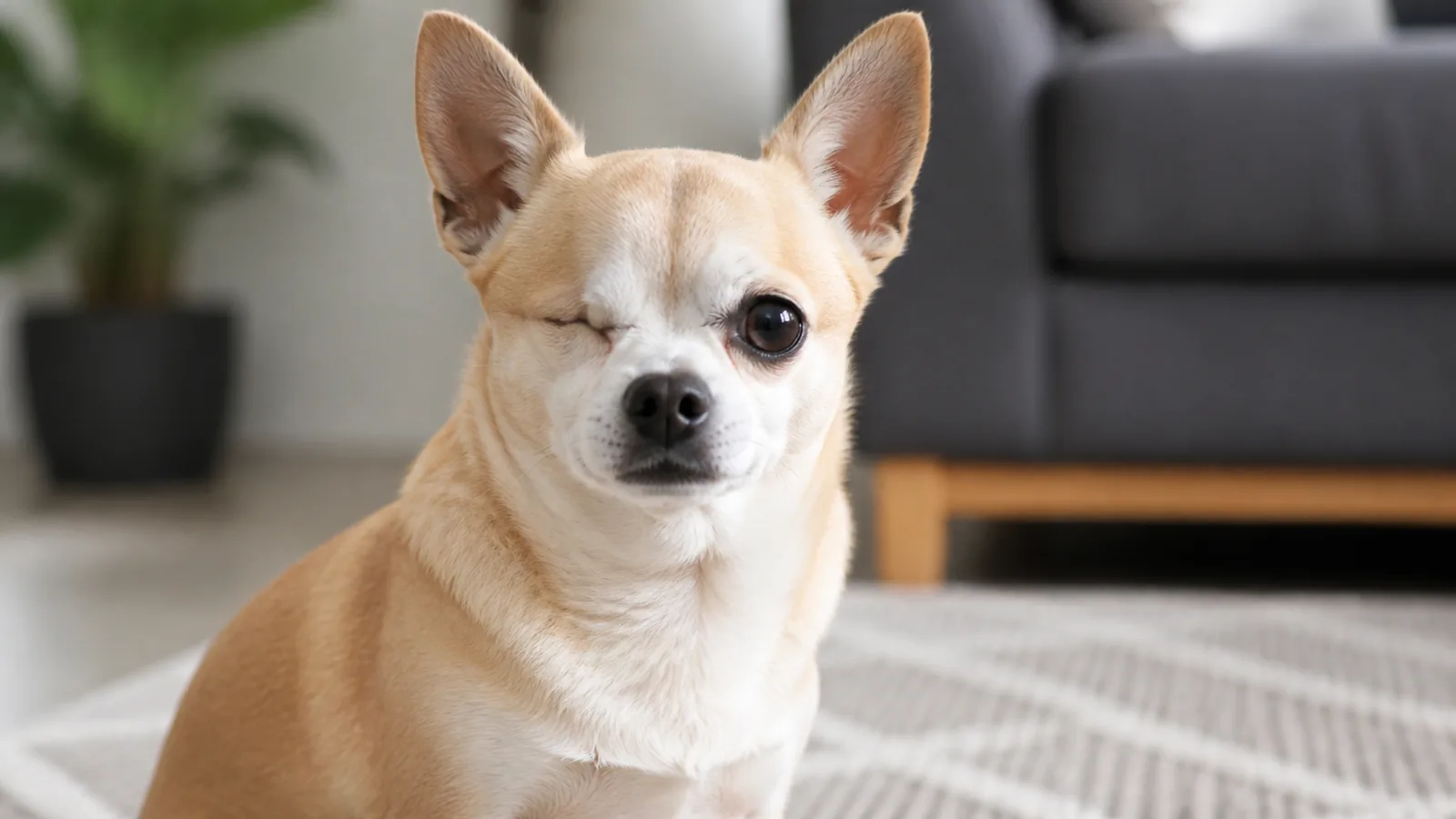
- Dogs and cats do remarkably well with only one or even no eyes, and most are back to normal routines within a week or two of surgery.
- The right operation depends on the diagnosis, so the exam and workup come before the decision does.
What's the Difference Between Enucleation, Evisceration, and Exenteration?
Enucleation removes the eye itself, evisceration removes the inner contents and leaves the outer shell to hold a prosthetic implant, and exenteration takes the eye plus the surrounding tissue when disease has spread beyond it. All three end with a pet who's out of pain, and the diagnosis drives the choice.
| Procedure | What's removed | Usually chosen when |
| Enucleation | The whole eyeball | The eye is blind and painful, or damaged past repair |
| Evisceration with prosthesis | The inner contents only, outer shell stays | A blind eye with no cancer and no infection, where appearance matters to the family |
| Exenteration | The eye plus eyelids and orbital lining | Cancer has grown beyond the globe |
What Happens During an Enucleation?
Enucleation is removal of the entire eyeball, after which the socket is closed and the eyelids are permanently sutured together. Your pet is under general anesthesia for it, and over the following weeks the space fills in with normal tissue, so the area sits flat and furred rather than sunken, with a smooth line most families stop noticing. It's by far the most common of the three, and eye removal is one of the surgeries we perform in house. The eye itself may need to go to a pathologist when cancer or disease has caused the problem, and they examine the tissue to give an exact diagnosis.
When Is Evisceration With a Prosthesis an Option?
In an evisceration with an intraocular prosthesis, the inside of the eye is removed and a silicone sphere takes its place inside the outer shell, so the eye keeps its shape and moves along with the other one. It's off the table when a tumor or an active infection is part of the picture. The look is close to natural, which appeals to families who hate the idea of a closed lid, though the eye still can't see and the outside stays a living surface that can develop ulcers later. We don't perform this one; it belongs to a veterinary ophthalmologist, and we can coordinate that referral for you.
Why Would a Pet Need an Exenteration?
Exenteration goes further, taking the eye along with the eyelids and the tissue lining the socket, and it's reserved almost entirely for cancer that has grown past the eye itself, where leaving that surrounding tissue behind would leave disease behind with it. The wider margin is what gives a pet a real shot at a clean result. Everything removed goes to a pathologist, and that report guides whether treatment beyond the operation makes sense. We may refer this procedure to a veterinary surgical specialist when a significant amount of tissue needs to be removed.
What Conditions Lead to Removing a Pet's Eye?
Most eye removals trace back to one of three problems: pressure inside the eye that can't be controlled, a tumor, or an injury too severe to repair. Stubborn ulcers, deep infection, chronic viral disease, and long-standing inflammation belong on that list too.
How Does Glaucoma End in Eye Removal?
Glaucoma is a rise in pressure inside the eye that presses on the optic nerve and retina, and it can take vision within days while causing a deep, constant ache that most pets never show in any obvious way. What families notice usually isn't squinting. It's a dog who stops meeting them at the door, or a cat who sleeps behind the couch instead of on it. Cocker Spaniels, Basset Hounds, Chow Chows, and Shar-Peis carry more risk of the inherited form, while cats more often develop it secondary to chronic inflammation inside the eye. An eye that turns red and cloudy overnight needs a pressure check that day, and that's one of the urgent eye problems we treat in dogs.
Dogs with the inherited form often lose the second eye in time as well, sometimes within a year or two. Preventive drops in the remaining eye can buy real time, so it's worth asking about them the same day the first diagnosis lands.
Can a Tumor in the Eye Mean Losing It?
Growths on the eyelid, on the surface of the eye, and deep inside the globe all fall under ocular tumors, and removing the eye is frequently both the treatment and the only way to learn exactly what the mass was.
- In cats: Flat brown spots on a cat's iris that spread, darken, or begin to raise the surface can signal iris melanoma, the most common tumor to develop inside the feline eye. A severely injured or chronically inflamed feline eye can also develop post-traumatic ocular sarcoma years after the original damage, which is why removal is so often recommended for a blind, damaged eye in a cat instead of leaving it alone.
- In dogs: Ocular melanoma is far more often benign than its feline counterpart, but a mass that keeps growing inside the eye can still block fluid drainage and push pressure up until the eye turns painful, which is what usually drives the decision to remove it. Eyelid lumps are common in older dogs and are frequently harmless, though they rub the cornea and often come off for that reason alone.
Take a picture of anything new with the date on it and bring it with you, because pigment that has sat unchanged for three years reads very differently from pigment that shifted over a season. Feline eyes tend to declare themselves late, so a new spot or a color change is worth an urgent care visit for your cat rather than a season of watching.
Can an Infection or Ulcer Really Cost a Pet Their Eye?
It can, and these are some of the hardest cases, because many began as something treatable. A deep corneal ulcer that keeps worsening despite treatment, or a melting ulcer, where enzymes liquefy the cornea over a matter of days, can rupture the eye before medication gets a foothold. Infection that reaches the inside of the eye, called endophthalmitis, is harder still to clear, since medication struggles to reach the deep chambers, and an eye that stays infected and blind usually hurts until it comes out.
Chronic viral disease belongs on this list too. Flare-ups of feline herpesvirus scar a cat's cornea a little more with each round, and years of that damage can leave the eye blind, painful, and past saving. Penetrating trauma rounds it out: a dog bite, foxtails, or a claw that punctures the globe needs to be seen the same day, whether or not the eye looks salvageable in the moment.
Which Eye Injuries Can't Wait?
Proptosis, where the eyeball is forced forward out of its socket after a dog fight or a blunt blow to the head, is a true emergency, and how many of the small muscles behind the eye are still attached is one of the strongest indicators of whether any vision can be saved. Flat-faced breeds like Pugs and Shih Tzus have shallow orbits, so it can happen from something as ordinary as a hard pull on a collar. Squinting that won't let up, sudden cloudiness, blood inside the eye, a visible wound, and a pet pawing repeatedly at their face are all ocular emergencies that need same-day evaluation rather than a wait-and-see week.
While you're on your way in, keep three things in mind:
- Never push a displaced eye back toward the socket: cover it loosely with a clean cloth dampened with sterile saline or clean water, and keep your pet from rubbing at it.
- Never give human pain medication: ibuprofen and acetaminophen are toxic to dogs and cats, and a single acetaminophen tablet can kill a cat.
- Skip the home flush: use nothing but sterile saline, and don't reach for leftover drops from an old problem or another pet, since steroid drops on an ulcer make it deeper.
Peak Pet Urgent Care is a walk-in urgent care open seven days a week here in Reno, and no appointment is needed. A bulging or bleeding eye is seen ahead of less urgent cases rather than waiting its turn. If it's the middle of the night, don't wait for us to open; go straight to the nearest veterinary emergency hospital.
What Happens When You Bring a Painful Eye In?
Pain control comes first, because a clenched lid can't be examined and a hurting pet can't hold still. From there the exam works through the surface, the pressure inside, and what's happening behind the iris. Those findings tell us whether this is a repairable problem or a removal conversation.
| What you're seeing | What it can mean | How fast |
| Eye out of the socket | Proptosis | Right away |
| Squinting, tearing, lid held shut | Corneal ulcer, foreign body, trauma | Today |
| Cloudy blue-grey eye with a red, angry white | Glaucoma or uveitis | Today |
| Blood pooled inside the eye | Trauma, high pressure, a clotting problem | Today |
| New or spreading dark spot on a cat's iris | Possible melanoma | Within a few days |
| Eyelid lump that's growing or rubbing | Eyelid tumor | Within a few weeks |
How Do We Decide Which Procedure Your Pet Needs, and When?
Diagnosis, comfort, and whether vision could realistically return drive the choice. Ocular salvage procedures can keep a blind but comfortable eye in place for certain pets, though they bring complications of their own, and the honest question is always whether the pain is controlled or simply being postponed a few months at a time.
Timing is the harder half of it. Almost nobody regrets moving sooner, and six months of drops that are losing ground usually means six months of a pet in pain. What our team can offer is a straight read on where that eye sits: whether the numbers are holding, whether the medication is still doing its job, and whether the discomfort has turned constant.
Waiting carries costs beyond the daily ache. A tumor gets more time to spread, a chronically damaged feline eye keeps that sarcoma risk on the table, and an eye under sustained pressure can stretch and eventually rupture. If you're caught between waiting and scheduling, come talk it through with a veterinarian who can put hands on your pet and tell you plainly what they're looking at.
What Does Life Look Like After Eye Removal?
Most pets are back to themselves faster than their families expect, often inside a week or two. Dogs and cats build their picture of the world out of scent and hearing far more than sight, and the change in appearance that the family grieves is not something the pet registers.
Recovery is short and uneventful for most pets. Plan on a cone for about two weeks, oral pain medication for the first several days, and bruising around the lid that peaks early and then fades. Taking the cone off early is the single most common reason an incision opens back up. Drainage, swelling that grows instead of shrinking, or edges that separate all warrant a call and a recheck.
The house needs less rearranging than you'd think. A few small habits help:
- Approach and pet from the seeing side so nobody gets startled out of a nap.
- Leave the furniture where it is for a few weeks while your pet rebuilds their sense of distance.
- Watch stairs, pools, and countertop landings at first, since cats in particular misjudge a jump or two early on.
- Keep a one-eyed cat indoors, because losing half the visual field makes traffic and other animals a much bigger gamble.
Feeling sad about that closed lid is normal, even when you're certain the surgery was right. Nearly every family says the same thing a month later: they stopped seeing it, and what they see instead is a dog who wants the ball again or a cat back on the windowsill in the afternoon sun.
What Pet Families Ask Us About Eye Removal
Will my pet be in pain after the surgery?
There's soreness for a few days, and your pet goes home with medication to cover it. Most pets are more comfortable after the operation than they were before it, because the chronic ache from a diseased eye ends the moment that eye comes out. If your pet still seems sore past the first several days, or the medication doesn't appear to be touching it, call us rather than riding it out.
Can my pet get around normally with one eye?
Most do, and quickly. Depth perception takes a short adjustment, so a dog may misjudge a step or a tossed ball for a week or two, and a cat may plan a leap more carefully than usual. Both compensate by turning the head slightly to widen what they can see. Cats are worth watching a little longer; if yours seems disoriented, hides, or stops eating, that's one of the urgent concerns in cats worth having looked at the same day.
Will the other eye need to come out later?
That depends on why the first one did. Trauma and most tumors involve a single eye, so the remaining one is usually fine for life. Inherited glaucoma is the exception, since in dogs the second eye often develops the same problem in time, though preventive drops can delay it considerably. Either way, the eye your pet still has deserves regular rechecks with your family veterinarian now that it's doing all the work.
Getting Your Pet Back to a Comfortable Life After Eye Surgery
Being told an eye needs to come out is hard news to sit with, and it's normal to need a minute before you can think it through clearly. In most cases the eye had stopped being savable a while before the decision got made, and what comes back afterward is the pet who'd been squinting and hiding. Trading a painful eye for a comfortable pet is a good trade, even when it doesn't feel like one in the exam room.
If your pet's eye looks painful, cloudy, bloody, or swollen, reach out and come in. Peak Pet Urgent Care is here seven days a week in Reno, and we'd rather look at an eye that turns out to be fine than meet it a week later and have to remove it.