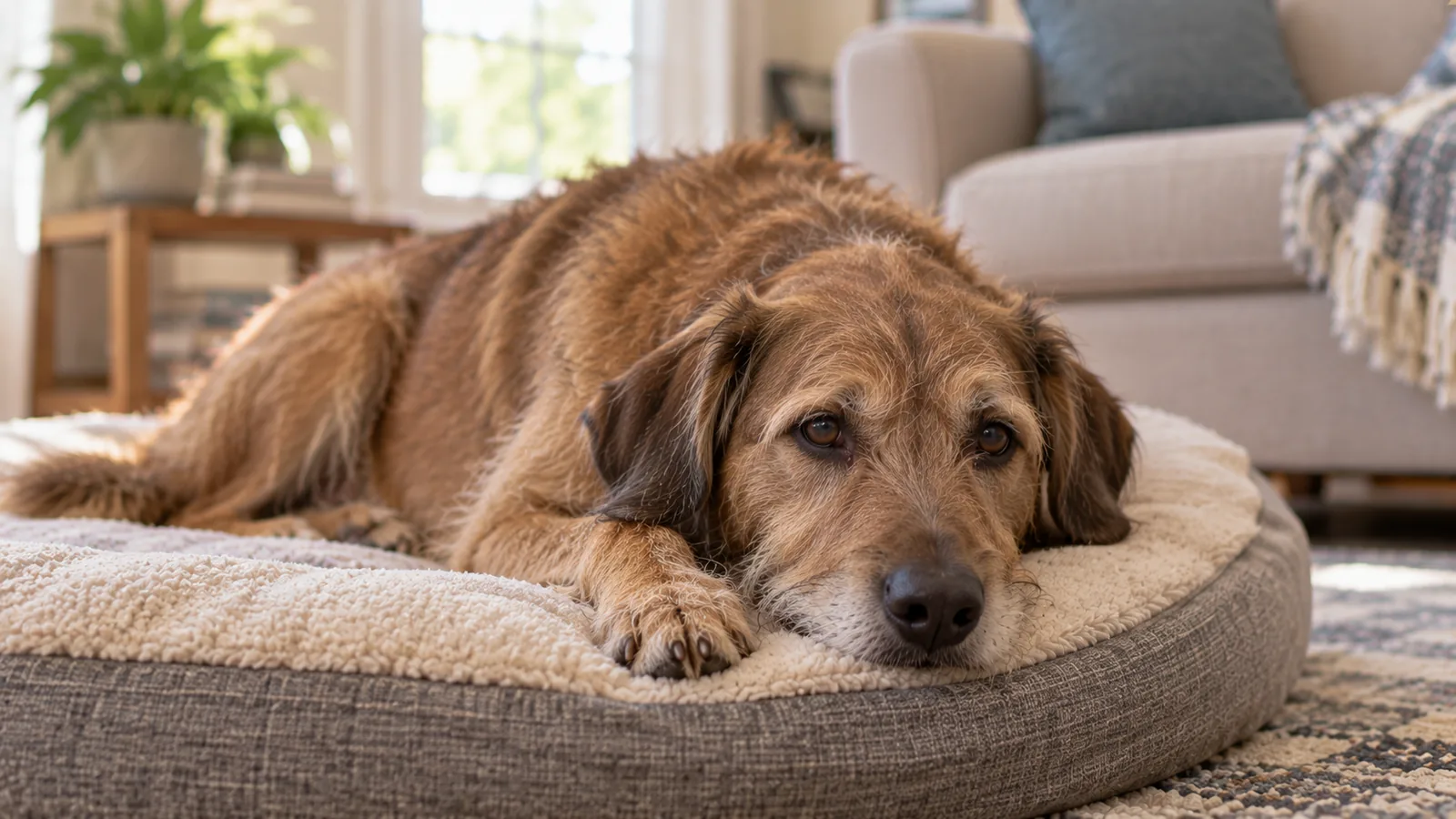
What separates lethargy from an ordinary tired day is how long the low energy lasts and what else has changed alongside it. Lethargy lingers, and it usually arrives with something else: a skipped meal, vomiting or diarrhea, hiding, or stiffness that was not there last week. Low energy is a symptom rather than a diagnosis, and the cause can be a painful tooth, an infection, dehydration, a swallowed object, or trouble in an organ you cannot see from the couch.
Peak Pet Urgent Care exists for the moments you worry: when your dog is clearly off, your regular veterinarian is closed or booked, and waiting until Monday feels wrong. We take walk-ins seven days a week for urgent pet care in Reno, and when your dog's energy drops we start with a full exam and a plan we talk through with you, including the blood work or imaging that would narrow down what is behind it. If your dog has been feeling low for a day or more, come see us.
What a Flat Dog Is Telling You
- Low energy that lasts more than a day, or arrives alongside vomiting, skipped meals, or hiding, calls for an exam rather than another night of watching and hoping.
- A short list of signs can't wait: collapse, labored breathing, pale gums, a bloated belly, or retching that brings nothing up all mean a 24-hour emergency hospital right now.
- Causes range from a painful tooth or a urinary infection to hormone disease, a swallowed object, heart trouble, toxins, and cancer, and blood work paired with imaging is what usually separates them.
- Dogs hide early illness well, which is why a drop in energy is so often the first thing a family notices.
What Does Lethargy in Dogs Actually Look Like?
Lethargy in dogs is a sustained drop in energy and alertness that outlasts a normal post-walk nap, and it usually shows up in small refusals: a hesitation at the stairs, a favorite toy ignored, a dog who has to be coaxed toward the food bowl. The pattern matters more than any single quiet afternoon.
Heat, a long hike, or an afternoon at daycare all earn a dog a slow morning, and ordinary tiredness lifts after rest. Clinical lethargy holds through the next meal, the next walk, and a knock at the door.
What helps us most is the timeline. Note when the low energy started, whether it came on over hours or over weeks, and what else shifted. A dog who is flat for a day but still drinking, still breathing comfortably, and still willing to stand sits squarely in the range of problems that are urgent but not life-threatening.
When Is Lethargy in a Dog an Emergency?
Collapse, labored breathing, pale or white gums, a bloated abdomen, repeated vomiting, and a dog who cannot be roused all sit on the short list of animal emergencies that need to be seen right now rather than watched overnight. Reno has 24-hour hospitals staffed for exactly that, and those dogs belong there.
Here's how the most common pairings sort out:
| What you see with the low energy | What it can point to |
| Pale, white, or yellow gums | Internal bleeding, severe anemia, liver disease |
| Labored or open-mouth breathing | Heart or lung disease, fluid in the chest |
| Can't stand, collapsed, or unresponsive | Low blood sugar, heart rhythm trouble, severe pain, Addison's |
| Went flat after heat or hard exercise | Heat stroke |
When you notice lethargy without the obvious signs of an emergency, you can walk in for urgent care seven days a week. If the workup points toward something needing critical care or overnight monitoring, we stabilize your dog and coordinate the transfer to a 24-hour hospital.
Which Symptoms With Lethargy Mean Your Dog Needs Urgent Care?
Lethargy plus almost any other change in your dog's body or habits is a reason to come in rather than wait. Skipped meals, drinking much more or less than usual, coughing, repeated vomiting or diarrhea, new discharge, changes in urination, a swollen belly, odd behavior, and signs of pain all tell us the low energy has a cause worth finding the same day.
None of these signs points to one specific disease, and you don't need to figure out which one it is. Your job is to notice the pairing. Ours is to sort out what's causing it.
Changes in Eating and Drinking
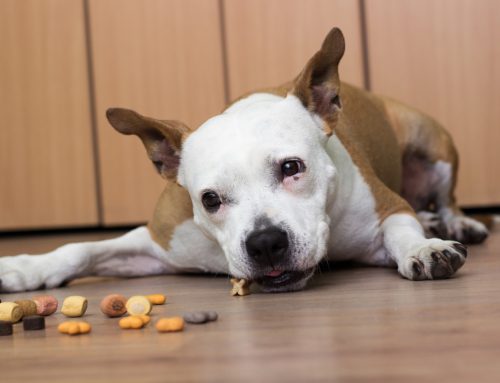
A dog who skips more than one meal while also acting flat deserves an exam, and puppies and toy breeds should be seen sooner, since they can't go long without food before their blood sugar drops. Watch for the dog who refuses dinner but happily takes a piece of cheese or a favorite treat. That isn't pickiness. Nausea, a sore mouth, or a painful belly often makes regular food unappealing while something soft and tasty still goes down, so if your dog is not eating their normal food, count it as a skipped meal.
Water matters just as much. A dog who suddenly empties the bowl over and over may have kidney disease, diabetes, a hormone problem, or, in an unspayed female, a uterine infection. A dog who won't drink at all, or drinks and vomits the water back up, can become dehydrated quickly.
Vomiting
One vomit in an otherwise bright dog isn't usually cause for alarm. Vomiting a couple of times in a day, vomiting along with lethargy, or vomit that contains blood or looks like coffee grounds needs a same-day exam, and the causes of vomiting range from a dietary indiscretion to a swallowed sock. If you know or suspect your dog ate something they shouldn't have, such as a toy, a corn cob, medication, or something from the trash, tell us right away. We provide foreign body surgery for these moments.
Vomiting that won't stop, so your dog can't keep even water down, belongs at a 24-hour emergency hospital. So does retching that brings nothing up, especially with a swollen belly.
Diarrhea or Constipation
Diarrhea that lasts more than a day, contains blood, is watery and frequent, or turns black and tarry calls for a visit, and so does any diarrhea in a puppy who hasn't finished their vaccines, since parvovirus can turn serious fast.
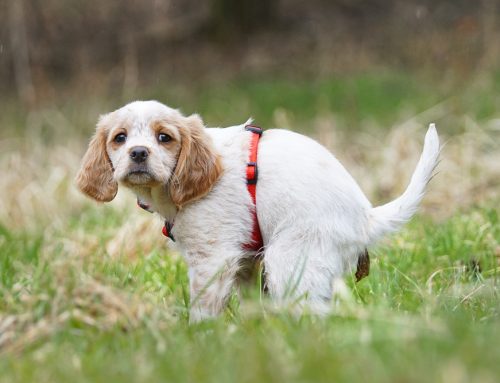
Constipation gets less attention, but it matters too. A dog who hasn't passed stool in two or three days, strains without producing much, or passes small, hard stools while also acting tired or losing interest in food should be seen, since the cause can range from dehydration to a blockage. Straining can be tricky to read, too: a dog hunched and pushing may be trying to poop, or may be trying to pee and can't, and only one of those can wait.
Urinary Changes and Genital Discharge
Straining to pee, going frequently in small amounts, blood in the urine, or new accidents in the house all point toward a urinary problem that's worth treating before it gets worse. Peeing much more than usual often goes hand in hand with drinking more. A dog who's straining and producing little or no urine at all may have a urinary blockage, which is an emergency. Stones filling the bladder often require a cystotomy to remove them.
Discharge from the genitals is worth a look when your dog is also low on energy:
- Vulva: Discharge in an unspayed female, especially in the weeks after a heat cycle and alongside extra thirst, can mean pyometra, a serious uterine infection. A dog with pyometra may have no discharge at all, so lethargy and heavy drinking in an unspayed female are reason enough to come in. Pyometra surgery is available at Peak Pet.
- Prepuce: A small amount of pale discharge is normal for intact males. Green, bloody, or heavy discharge, especially with straining to urinate, points to infection or prostate trouble.
A Swollen or Distended Belly
A belly that looks rounder than usual, feels tight, or seems to have grown over a few days is never just weight gain when your dog is also lethargic. How fast it happened tells you how fast to move.
A belly that swells suddenly, especially with weakness, pale gums, or collapse, can mean internal bleeding. In older large-breed dogs, a tumor on the spleen can rupture without warning, and rat poison and hidden trauma, like being hit by a car, can cause bleeding too. For dogs with splenic bleeding, we can perform a splenectomy here at Peak Pet Urgent Care.
Sudden swelling with unproductive retching and restlessness can mean bloat, where the stomach fills with gas and can twist. Both belong at a 24-hour emergency hospital right away.
A belly that fills more gradually, over days to weeks, may be collecting fluid. This buildup, called ascites, can come from heart failure, liver disease, low blood protein, or cancer, and it often shows up alongside tiredness, a dropping appetite, or faster breathing. Gradual swelling isn't a wait-until-next-week problem, so bring your dog in and we can use imaging to find out what's collecting and why.
Coughing and Sneezing
A dog with a mild cough who's otherwise bouncing around can often wait for a regular appointment. Coughing in dogs becomes more urgent when it comes with lethargy, a poor appetite, fever, or faster breathing at rest, which can signal pneumonia or a heart problem. A dog who's coughing and working hard to breathe, or breathing with an open mouth at rest, needs a 24-hour emergency hospital.
Sneezing that won't let up, thick yellow or green nasal discharge, a nosebleed, or discharge from only one nostril also needs a look. Around Reno, a cheatgrass seed lodged up the nose is a common culprit, and a dog who sneezes violently and paws at their face after a walk deserves a same-day exam and rhinoscopy to remove the seed.
Eye Changes
Eyes can reflect problems in the eye itself or somewhere else in the body, so changes paired with lethargy are worth a prompt visit:
- Discharge: Thick yellow or green eye discharge can mean infection.
- Redness or pain: A red eye, squinting, holding an eye shut, or pawing at the face can signal an injury to the eye's surface, inflammation, or glaucoma.
- Cloudiness: A sudden blue or cloudy haze over the eye is different from the slow graying of age and needs to be seen quickly.
- Vision changes: Bumping into furniture, hesitating at stairs, or seeming lost in a familiar room can mean sudden vision loss, which sometimes comes from high blood pressure or a detached retina.
- Dilated or uneven pupils: Pupils that stay large in bright light, or one pupil that's bigger than the other, can point to glaucoma or a neurologic problem.
A painful, red, cloudy eye with a large pupil can be glaucoma, which can cost a dog their vision within hours or even require removal of the eye, so treat it as an emergency.
Behavior and Neurologic Changes
Changes in how your dog thinks and acts can mean something is affecting the brain, from a toxin or liver problem to infection, low blood sugar, or a mass. Signs to take seriously include:
- Confusion or dullness: Seeming lost at home, not recognizing familiar people, or responding slowly to their name.
- Staring into space: Standing in corners or staring at walls, especially when it's new.
- Head pressing: Pushing the head firmly against a wall or furniture.
- Loss of balance: A head tilt, circling, falling to one side, or eyes that flick back and forth.
- New aggression or irritability: Growling or snapping out of character is often a sign of pain or illness rather than a behavior problem.
- Seizures: A single seizure in a dog who recovers fully should be seen the same day. A seizure that lasts more than five minutes, or more than one seizure in 24 hours, is an emergency.
Slow changes in an older dog, like more nighttime pacing over several months, can be cognitive decline, which still deserves a visit. Changes that appear over hours or days need to be seen right away.
Signs of Pain
Dogs hide pain well, and lethargy is often the first clue. Other common pain signs include a hunched back, trembling, panting while resting, reluctance to jump or climb stairs, yelping when picked up, and licking one spot over and over. Limping that lasts more than a day or two, or any limp where your dog won't put weight on the leg, belongs on the urgent care list too. A dog who's wobbly, dragging their back legs, or suddenly can't walk needs a 24-hour emergency hospital.
If you're seeing lethargy plus any of these changes, you don't need an appointment. Walk in, and we'll take it from there.
What Can You Check at Home Before You Come In?
Gum color, resting breathing rate, temperature, hydration, and whether your dog will stand and walk when asked make up a five-minute home health checkup, and those notes give a veterinary team far more to work with than "he's just not himself." None of it replaces an exam. It helps you decide where to go, and how fast to move.
- Gums: Lift the lip and look. Healthy tissue is pink and moist, and color returns in about two seconds after you press with a finger. White, gray, brick red, or yellow is an emergency finding.
- Breathing: Count chest rises for 15 seconds while your dog rests, then multiply by four. A resting rate in the 40s, or any visible effort, belongs in your notes.
- Temperature: Normal runs roughly 101 to 102.5 degrees. Above 103 or below 99 means a veterinarian, not a wait-and-see. Cold extremities are a signal to come in sooner.
- Food and water: Record the last real meal, the last drink, and the last normal stool. Tacky gums and skin that stays tented when lifted suggest dehydration.
- Movement: Will they rise on their own, take a few steps, and lift their head when you say their name?
Bring your notes, on paper or in your phone. Walk-ins are triaged on arrival with the sickest patients first, and specifics move that along.
How Do Veterinarians Figure Out What's Behind It?
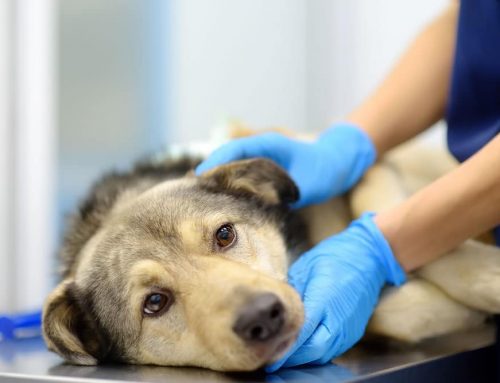
Sorting out low energy starts with your history and a nose-to-tail exam, then narrows through testing: blood work and urinalysis for organ function, infection, and blood sugar, imaging for the chest and abdomen, and a hands-on pain assessment for the things a dog won't volunteer. Our veterinarians start with what you noticed at home, since a good timeline shortens the list faster than any single test.
Not every dog needs every test. We start where the exam and your story point, explain what each test is likely to answer, and decide together how far to take it today.
What Reno Dog Families Ask Us About Low Energy
How long should I wait before bringing my dog in?
Bring your dog in once the low energy has lasted more than a day, or sooner if it showed up alongside vomiting, skipped meals, or hiding. Puppies, small breeds, and seniors carry less reserve and get less runway, so a puppy who's flat for half a day already deserves a look. If your dog has a chronic disease, like diabetes, Addison’s, cancer, or a history of auto-immune diseases, move faster. Anything on the emergency list skips the waiting question entirely and goes straight to a 24-hour hospital.
Can stress or a change at home make a dog lethargic?
Stress really can flatten a dog for a day. A move, a new baby, boarding, fireworks, or a house full of guests all register in behavior first. But stress is a diagnosis of exclusion: it's what's left after the exam and the lab work come back clean. If it lasts more than a day or two, we look for a medical cause before settling on a behavioral one.
My dog is eating normally but won't get off the couch. Still worth a visit?
A dog who eats normally but won't get off the couch is still worth a visit. Dogs with early heart disease, arthritis, a thyroid condition, or a slow-growing tumor often clear every bowl right up until they don't, because stamina and enthusiasm change before eating does. If your dog has turned down activity they used to love for more than a couple of days, an exam makes sense even with a full belly.
When Your Dog's Energy Doesn't Come Back
You know your dog's normal better than anyone, and the feeling that something is off is usually right. Peak Pet Urgent Care takes walk-ins seven days a week in Reno, and a visit starts with an exam and an honest conversation about what is most likely going on. If the low energy has hung on, reach out or come in.